He had done everything the internet told him to do. He lost weight, kept it off, and stayed active. The fullness in his chest never changed. That is usually the point where men start to suspect the advice they were given was wrong, and in his case it was.
What he actually had was glandular tissue, not fat, and no amount of training was going to remove it. His case is a clean example of how much of the standard advice around gynecomastia falls apart once you look at the tissue underneath.
Below, we take those assumptions one at a time and compare each to what we found and did.
Myth: “If you lose weight, the chest will flatten on its own.”
Reality: For this patient, weight was not the issue.
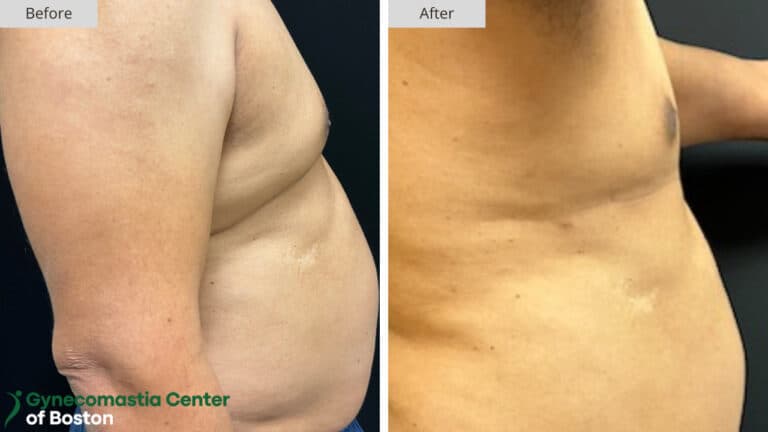
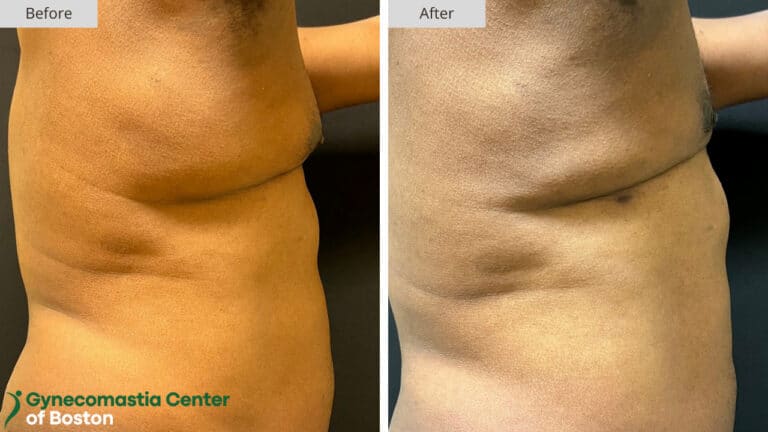
When he came to the Gynecomastia Center of Boston, he had already made an effort to live a healthier lifestyle. His weight was stable, and he was active. But no matter what he did, the fullness in his chest stayed the same. The problem wasn’t just fat. It was also dense glandular tissue behind the nipple that doesn’t respond to diet or exercise.
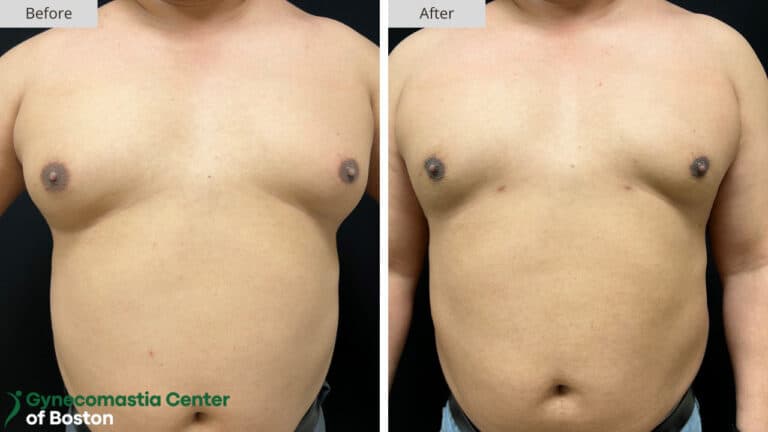
From the front, his chest appeared rounded and projected outward. From the side, the breast tissue created a soft bulge that looked out of place compared to his upper arms and torso.
Gynecomastia is not always about weight. It’s about the tissue beneath the surface, and only surgery can correct it when glandular tissue is involved.
Myth: “Liposuction alone is enough.”
Reality: This case required liposuction and direct gland excision.
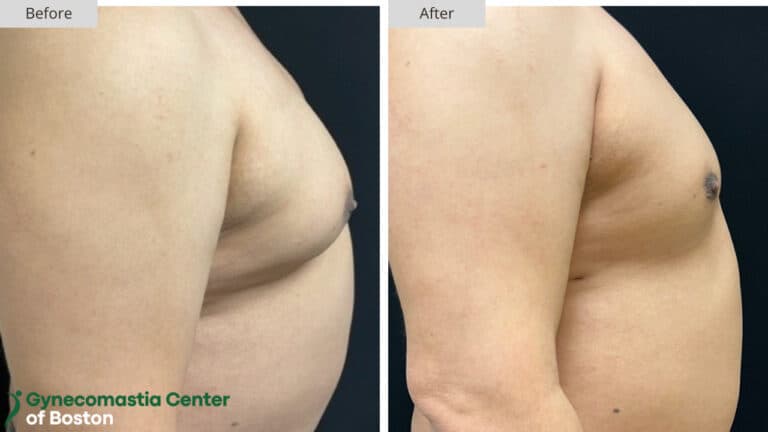
Using a technique known as liposuction-assisted gynecomastia surgery, we were able to address both types of tissue. First, liposuction was used to remove soft fat and shape the chest. Then, through small, hidden incisions at the base of the areola, we removed the firm glandular material that was causing the majority of the projection.
This dual approach creates a smoother, flatter result and avoids the “crater deformity” that can occur if only fat is removed.
Myth: “The results will look surgical or obvious.”
Reality: His chest now looks completely natural.
The goal of gynecomastia surgery isn’t to create dramatic or artificial results. It’s to restore balance and eliminate something that feels out of place. In this case, the patient’s new contour flows naturally from his shoulders to his upper abdomen. The nipple no longer appears pushed forward or stretched.
From the side view, the chest lies flat against the torso, with no more visible bulge. Most importantly, the results are subtle enough that no one would ever know he had surgery but powerful enough to make a meaningful difference in how he sees himself.
Myth: “Recovery will take months.”
Reality: Most of the healing happened in just a few weeks.
This patient wore a compression vest to help reduce swelling and support the healing tissue. By the end of the first week, he was back to daily routines. Within three weeks, the swelling had significantly decreased. By six weeks, he had returned to exercise and was cleared for full activity.
There was no need for drains, and the incisions healed well with minimal visibility.
Final Takeaway
This patient’s experience is a great example of how targeted gynecomastia surgery can correct glandular chest fullness with minimal downtime and natural results. The outcome wasn’t about changing who he was. It was about removing a long-standing frustration that had never responded to weight loss or lifestyle changes.
At the Gynecomastia Center of Boston, we see stories like this every week. When done with precision and care, gynecomastia surgery isn’t just corrective, it’s restorative.
If you are dealing with gynecomastia and want to understand next steps, reach out for your gynecomastia consultation to get started.